


IT was a niggling feeling in my gut as I walked into my executive office on the ninth floor of the Manitoba Public Insurance building in March 2017. A feeling that would ultimately change the course of my career and my life.
As vice-president of People and Product, my career had been a fast ascent up the corporate ladder. I was proud of what I had accomplished, the impact I was having and the opportunities ahead. Yet despite every logical reason to stay the course, something deeper was telling me it was time to move on.
As leaders and business owners, how often do we experience that tension? The data may support one decision while our instincts point us in another direction. The most effective leaders learn to pay attention to both.
What followed was my “heels-to-boots” journey. I accepted another senior leadership role, only to find myself released less than three months later. It was a humbling experience that forced me to confront burnout, rebuild my confidence and reconnect with who I was beyond my title.
During a weekend at our family cottage, my attention became fixated on two red Adirondack chairs overlooking the water. That feeling eventually inspired the Red Chair Framework for self-leadership.
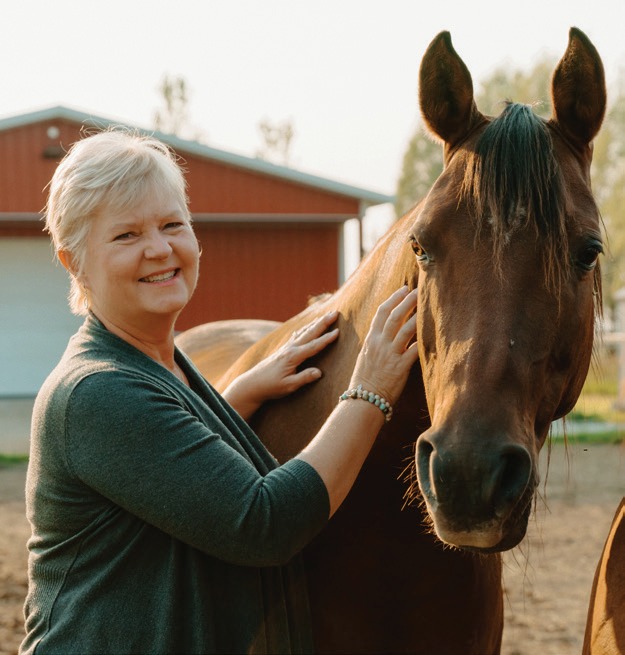
Around the same time, trips to the barn with one of our daughters sparked a curiosity about horses. I became fascinated by the relationship between horse and human and began exploring whether horses could play a role in leadership development.
Seven months later, my husband and I purchased 20 acres near Birds Hill Park and began creating what is now Red Chair Ranch.
Today, the Ranch serves executives, entrepreneurs, professionals and leadership teams through equine-assisted leadership development, executive coaching and facilitated team experiences. Hundreds of people from sectors including aerospace, insurance, Crown corporations and not-for-profit organizations have taken part.
So why horses?
Business leaders spend much of their time in their heads. Strategy, analysis, problem-solving, forecasting and decision-making are essential. Yet leadership is ultimately exercised through relationships.
Horses provide immediate, honest feedback about how we show up. They do not respond to job titles or organizational charts. They respond to authenticity, clarity, trust and congruence between what a person says and what they actually project.
In many ways, horses reveal the gap between our intentions and our impact.
Through our work with the herd, leaders often discover patterns they have not previously recognized — tendencies to over-control, avoid conflict or hesitate in difficult conversations. They also uncover strengths they can amplify, such as confidence, empathy, resilience and presence. The result is not simply personal insight. Leaders bring these discoveries back into the workplace, influencing conversations, decisions, team dynamics and organizational culture.
Building the ranch taught me another lesson about leadership: before building something new, we often need to dismantle something old.
Organizations do it through transformation initiatives. Teams do it by changing how they work. Leaders do it by releasing outdated assumptions, behaviours and limiting beliefs.
I still love strategy. But strategy is only as effective as the people responsible for carrying it out.
Sometimes meaningful change begins with a spreadsheet, a strategic plan or a set of market indicators. Sometimes it begins with a quiet feeling in your gut and the courage to listen. The most effective leaders learn to pay attention to both.

