


Whether your favourite tipple is a dill pickle vodka, an India Pale Ale or a peach cider, you can find what you are looking for in Manitoba thanks to its vibrant community of artisanal breweries and distilleries.
The craft alcohol industry in Manitoba began to take off about 10 years ago and is small compared to other provinces like Ontario and British Columbia, whose craft beer industry accounts for 30 per cent of the market and employs more than 6,000 people.
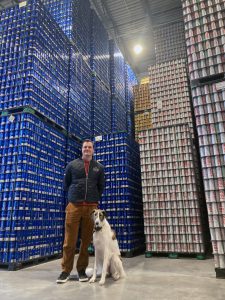
As the sector has developed there have been a few growing pains, not least of which is Manitoba’s markup structure. Although the markup has been reduced over the years from 95 per cent to 40 per cent for cider and liquor and 36 per cent for beer, Manitoba still has some of the highest markups from B.C. to Quebec, and Kevin Selch, founder of Little Brown Jug brewery and taproom in Winnipeg believes that’s affecting growth in the sector.
“A can of our beer sold in Ontario would net us about 35 cents more, purely because of markup differences,” he says. “That revenue could be reinvested in equipment, staff and market development. When so much margin is taken off the top at home, it limits our ability to scale and compete outside of the province.”
Interprovincial trade barriers are also hampering many small alcohol producers’ ability to expand into other domestic markets such as Ontario and Quebec, whose liquor commissions don’t allow alcohol from other provinces on their shelves.
“Our provincial governments along the way have allowed other producers easy access to our marketplace but it wasn’t reciprocated into other provinces,” says Chris Warwaruk, founder of Farmery Estate Brewery at Neepawa. “The only way to tackle that is for everyone to bring down their barriers at the same time, allow free commerce, and let the marketplace drive the supply and the price point. You can’t protect your own market and expect free enterprise to prosper.”
 Selling the story
Small alcohol producers don’t have the budget to compete with large multinationals toe to toe so they rely on the uniqueness and quality of their products, their story and their credibility to win more market share.
“We can only produce so much product in any year,” says Jason Kang, owner of Capital K Distillery in Winnipeg. “We don’t have a huge budget to advertise, so we focus on talking to customers, so they understand what craft alcohol is and why there is a price difference between it and the bigger brands.”
Marcus Wiebe, who founded Dead Horse Cidery and Taproom on the family’s fourth-generation farm near Winkler, says customers value the fact that his products are made from locally grown ingredients. “We use local apples and there’s a story behind it that makes it unique,” he says. “Last year, we saved 300,000 lbs. of Manitoba apples from going to waste.”
“We use ingredients that we grow on our farm, so our lager has a unique malt and hop profile, but we also offer consumers something that is not common in the landscape in that they know exactly where the ingredients are coming from,” says Warwaruk.
Are people drinking less?
Research suggests that alcohol consumption in Canada is trending downwards, but it’s still a massive market.
“What we are doing as craft brewers is carving out a niche in that market, and even today the value proposition to our customers is, people might be drinking less but they care more about what they are drinking,” says Selch. “That could be that they like how it tastes, or it’s fresher or they want to support a local company, so whatever their motivation is, maybe they are drinking two craft beers instead of four macro beers. There is still a lot of potential out there.”
That said, many craft alcohol producers are also offering non-alcoholic alternatives. “It’s a massively growing category, and there are functional beverages too such as protein sodas,” says Wiebe, who has added a non-alcoholic line. “We have all the equipment, so it was an easy transition to make.”
Farmery Brewery has also introduced a line of non-alcoholic beverages, mocktails and sodas, including a zero-sugar natural energy drink.
The tariff effects
The current trade situation with the U.S. has impacted artisanal alcohol producers in different ways, such as increasing their costs for aluminum cans that are subject to retaliatory Canadian tariffs. Trade uncertainty has also had a major impact on export plans. Both Warwaruk and Selch have shelved plans to explore sales in Minnesota, Wisconsin and the Upper U.S. Midwest.
On the flip side, the removal of U.S. alcohol from Manitoba shelves has freed up some shelf space for local producers and some have enjoyed a modest bump in sales from Manitobans eager to support their local industry.
“The fact we have a little more market share is good but because we’re small, our costs are higher, so we are always seeking the balance point,” Kang says. “In the end, it’s about consumer choice. If they understand this industry, and they are looking for a different kind of product, they will buy.”
Economic benefits for Manitoba

Besides creating jobs, paying taxes and buying goods and services in Manitoba, the craft alcohol attracts tourism and supports local communities in many ways. Selch estimates that Manitoba’s craft beer industry generates about $33 million in sales and of that, more than $1 million goes back into the community to support cultural, sports and community events and programs.
“When we are trying to attract conferences or tourists, it’s always focusing on something to do with the local craft brewing industry,” he says. “That’s what people want to come and check out. They want to see the places, experience the culture, and have something that they can only get here.”
What’s ahead?
Many Manitoba craft alcohol producers believe that their sector has the potential to become as great an economic driver as it is in other provinces with a few caveats, including the need for policy changes and more support.
“In the current geopolitical climate, local breweries are a real success story for Manitoba’s economy,” says Selch. “We are Manitoba entrepreneurs who have invested here at home. That’s the kind of investment you want to attract, support and celebrate. It means having policies and markups that actually enable growth, because that’s how you build long-term success.”