


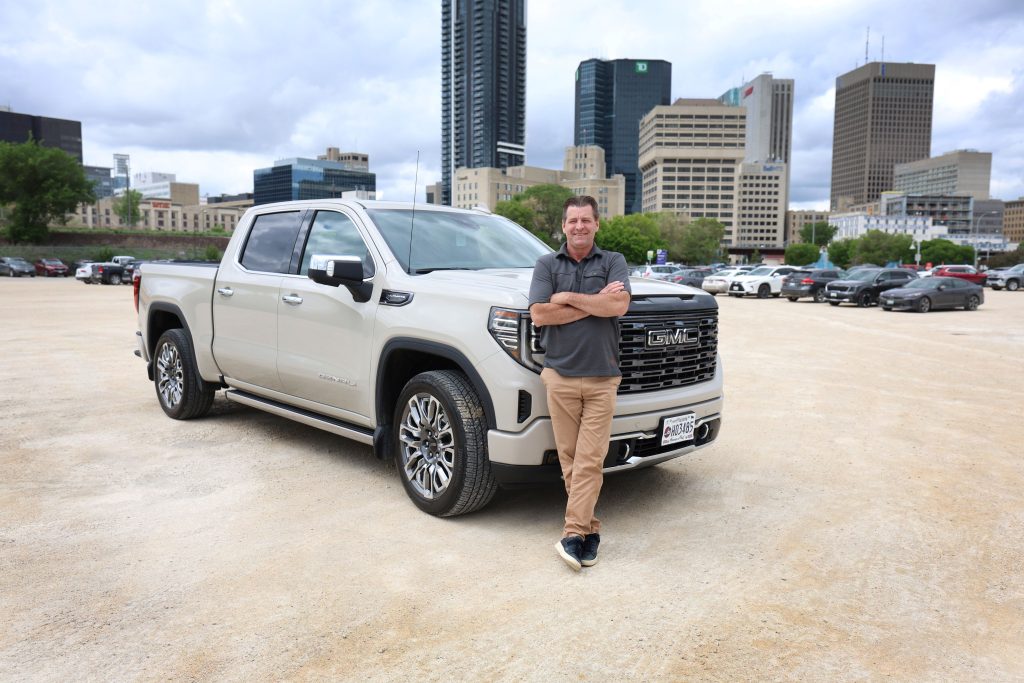
By the time Chris Davis knocks on your door, it’s already too late.

You’re at least three payments behind on your vehicle loan and he or another member of his team have arrived to take it back on behalf of your lender.
All isn’t lost, however. You’ve still got 21 days to clear the arrears and reclaim your car or truck from the auction house. After that, though, it’s gone.
It’s never a surprise when the recovery specialists from City Collections show up at your house or workplace because your bank, credit union
or other lender has already hired a collection agency, which has been in touch — repeatedly — with you about catching up on your payments.
“They know their days are numbered,” Davis says. “We know where they live and work. We find the vehicle, block it in and call the tow truck. Then we knock on the door and say ‘here’s your notice of seizure.’”
City Collections has been in business for more than three decades and business is most definitely booming. It has 29 licensed recovery specialists plus another five people who work in its Henderson Highway office. Together, they repossess between 250 and 300 vehicles in Manitoba and Saskatchewan every month. That’s about 10 cars and trucks every day.
Davis attributes at least part of the growth to the business and consumer loans made available by the federal government during the COVID-19 pandemic.
“Almost anybody could get a car loan then – and they did. Everybody who owned a convenience store or was selling a widget on Amazon got this money. Now they have to pay it back,” he says.
There are strict rules by which City Collections and other agencies have to play. For example, it’s against the law for them to phone or visit a debtor before 7 a.m. or after 9 p.m.; to phone or visit on a Sunday or statutory holiday; or to harass debtors or their neighbours.
Every repossession has to be done in accordance with the Consumer Protection Act, which stipulates written notice must be given to debtors within 48 hours, telling them that their goods have been repossessed, the amount that must be paid to have the goods returned, how the amount owed is calculated and where the goods are being stored.
But City Collections does much more than just cars and trucks. It also collects farm equipment, boats, all terrain vehicles (ATVs), snowmobiles, trailers and recreational vehicles.
“Anything that people want that has value,” Davis says. “But we don’t City Collections sees post-pandemic boom repossess things worth less than $5,000.”
City Collections’ clients include banks and credit unions, private lenders as well as financing and leasing companies.
Private lenders cater to consumers with significant credit problems who don’t qualify for bank financing, often because they’ve bounced a few too many cheques.
“There are more private lenders out there than you realize,” Davis says. “Once you’re a credit criminal, you get bounced off of banking platforms.”
Not every repossession attempt is a winner but City Collections has a success rate of 86 per cent with an average turnaround time of five days.
Davis says his team looks beyond the transaction and they’re sympathetic to the plight of the people they’re visiting.
“We’ll offer to give them a hand getting the baby seat out of the vehicle,” he says.
And they realize that having a vehicle repossessed in a fashion that can be seen by all of the neighbours can be embarrassing.
“People don’t typically talk about it. They don’t want the neighbours to see the tow truck coming. Sometimes they’ll ask if the vehicle can be moved a block over before it’s put on the hoist,” he says. “Manitoba is a seize or sue province and the best option is usually to give up the vehicle and find something with lower payments and lower interest rates. Give up the car and you’re off the hook for all that money.”
As you might expect, not everybody is willing to relinquish their vehicles without a last-ditch break for freedom. Mike Stratischul, a veteran
recovery specialist at City Collections, was nearly run over by a debtor whose townhouse he had visited a number of times.
“His wife was lying to cover for him but I recognized him from Facebook. He said that wasn’t him so I gave him my card. On my way out of the parking lot, I found his car a few units down. I parked behind it so he couldn’t leave and got out to check the serial number. He came outside and asked what I was doing. When he realized he couldn’t get out, he jumped in the car, smashed into the car beside him, smashed into the building — tearing the eavestroughs off — and drove off over the grass. I had to jump out of the way,” he says. “I got him three days later at his work.”
Davis and his team also enforce foreclosures on small businesses. For example, when a wood shop in a Winnipeg strip mall refused to install
the proper ventilation to bring its space up to code — after three years of requests — a recovery specialist arrived with a lock smith, changed the locks and posted a note on the door why the tenant was locked out.
“There was saw dust everywhere, including on the electrical boxes. Things can blow up when they’re not up to code. We asked the employees, ‘would you rather burn to death?’ They got it sorted it out over a long weekend,” he says.
While putting vehicles up on a tow truck hoist is the most visible part of what Davis and his team do, they’re ultimately in the business of saving business relationships.
Yours.
“Why jeopardize your business reputation by attempting to collect debts and recover assets on your own?” he says.