


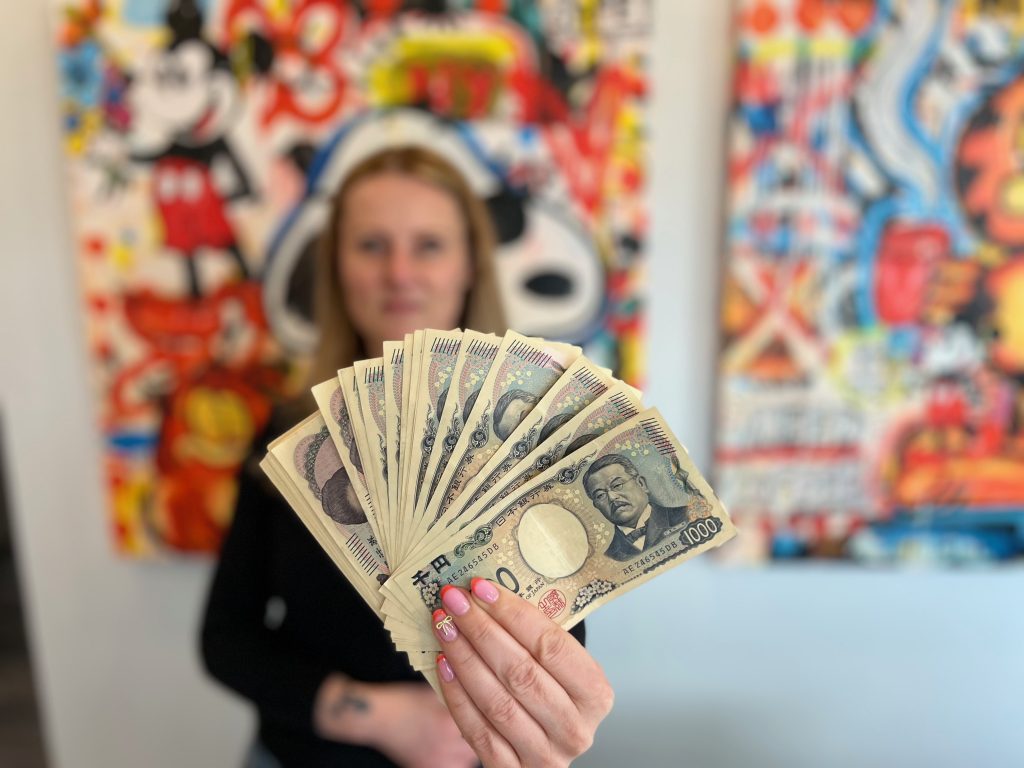
I’m on my way to a two-week trip to Japan. I have a few yen in my pocket, but since I haven’t converted Canadian dollars into anything other than U.S. dollars in several years, it took some research to decide where (or even if) I would get my cash before I left Winnipeg.
The internet suggested withdrawing cash from one of Japan’s widely popular 7-Eleven ATMs could be a good choice, but I had my doubts.
I’m not alone in my quest to understand exchanging foreign currency. Many international destinations, including Japan, are seeing an increase in Canadian travellers thanks to the tensions with our neighbours to the south, along with the weak loonie to the U.S. greenback, which has made vacations on the other side of the 49th parallel significantly more expensive.
Compared with last year, Canadians are converting fewer Canadian dollars into U.S. dollars for account transfers and cash withdrawals, while demand for euros and Australian dollars is rising, says Christina Varvarikos, director of FX, Personal Banking & Investments at RBC Banking.
British pounds and Mexican pesos have also topped the exchange rate list recently for many Canucks, according to Currency Mart Winnipeg Downtown.
Whatever the destination, if you are planning to go abroad, currency exchange comparisons and considerations can help you get the most for your loonies.
Convenience for account holders is often why people gravitate to their bank for getting their foreign currency, says Varvarikos, pointing to the ability to use online banking or mobile apps to purchase foreign cash. She adds trust also plays a role, since transactions are recorded and traceable, providing peace of mind in case of disputes or errors.
Major banks typically offer 40 to 65 currencies. Branches usually keep common currencies, such as U.S. dollars,euros and British pounds, in stock. If you need Dominican pesos or Jamaican dollars, you will have to order them in advance and pick it up a few business days later.
The sourcing, transporting and stocking of foreign cash is one of the reasons banks tend to build larger markups into their exchange rates, especially for the ones you have to order in.
Those markups are part of the foreign exchange spread — the difference between the market exchange rate and the rate offered to customers — which banks and currency exchange providers build into transactions as a source of revenue and to cover operational costs.
After trekking to 116 countries as a travel advisor, Christine Ward generally steers travellers toward dedicated money exchanges to secure slightly better rates than banks.
She prefers ordering money online through International Currency Exchange, a company that operates out of major airports, including Winnipeg’s airport, picking it up right before takeoff. But the convenience at airport kiosks can command a higher exchange premium and transaction fees for a last-minute grab.
Fees at currency exchange providers may come in the form of fixed transaction charges or percentage-based costs calculated on the converted amount. Currency exchange providers also include local storefronts, such as Millennial Currency Exchange or Currency Mart Winnipeg Downtown. These operators tend to carry a broader inventory and their foreign exchange spread is generally lower because of less-costly overhead, says a spokesperson from Currency Mart.
Your destination should also be a consideration, says Ward. Many of the top locales take credit cards and you’ll only need a small amount on hand for transportation or tips. In my case, Japan doesn’t have a tipping culture but temples, shrines and many food vendors only take cash. A quick search about your destination before you fly out will prevent you from over-purchasing cash.
If you decide to skip the pre-trip conversion and pull some pocket money from a local ATM instead — say at a Japanese 7-Eleven — choose to be charged in local currency, not Canadian dollars. That way, your bank handles the conversion on its end rather than the ATM or merchant’s bank, which often applies a less-than favourable exchange rate. But beware, using a credit card is typically considered a cash advance, which can come with additional banking fees.
In the end, I got my yen from a currency exchange provider. The on-hand stock (sheepishly, I left getting money to the last minute), the exchange rate at the time,and a flat transaction fee of less than $4 made it the best choice for my trip. But a little legwork on what will work for your destination is the best advice before you put your feet up.
QUICK CASH: GENERAL CURRENCY EXCHANGE COMPARISONS
Using exchange rates from May 20, 2026, $500 Canadian was worth approximately ¥57,700 before exchange spreads and fees. Here’s what travellers might receive through different exchange options:
● Bank (RBC: ¥54,000–55,500
● Airport provider (International Currency Exchange): ¥50,500–53,000
● Currency exchange provider (Millennial Currency Exchange): ¥56,000–57,000