


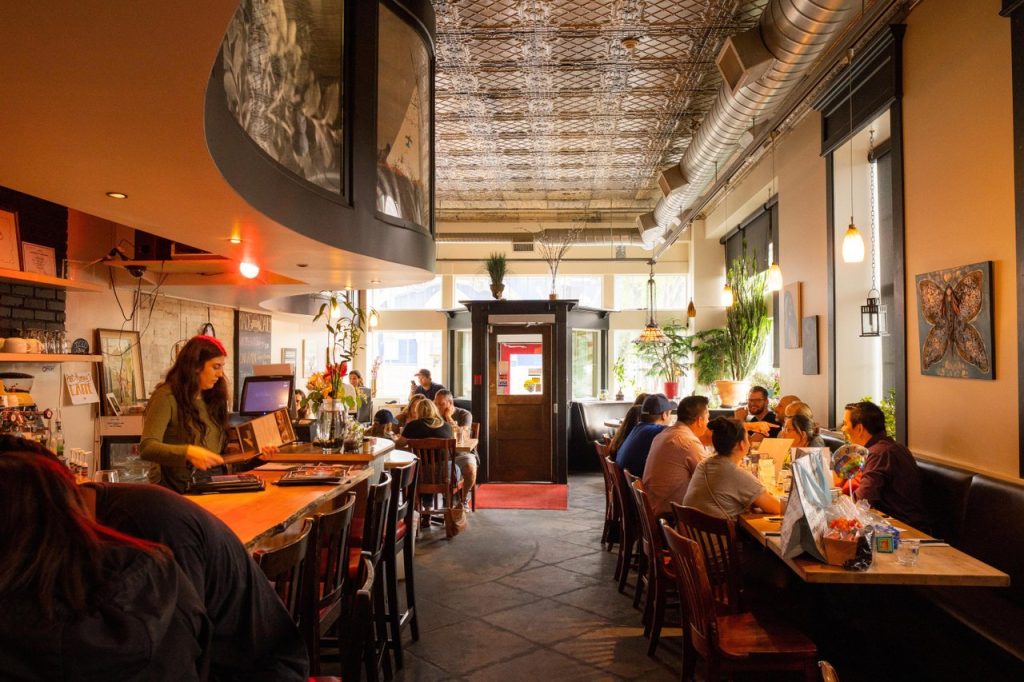
Feast Café Bistro has become an internationally-recognized gathering place and one of the early Indigenous-owned restaurants in Canada after opening in 2015. For more than a decade, the 50-seat restaurant has brought together Indigenous tradition, modern Manitoba cuisine and community connection.
Rooted in First Nations food pathways, Feast Café Bistro’s menu honours traditional ingredients and harvesting practices while embracing
a contemporary approach that uses locally-sourced products and foraged foods.
Owner Christa Guenther describes the restaurant as a space for storytelling, culture and shared experience, welcoming both community members and visitors seeking an authentic connection to the people, history and flavours of the region.
“Through food, hospitality, tourism and conversation, we celebrate the richness of First Nations and Métis traditions while creating a modern dining experience that reflects the spirit of Manitoba today,” she says.
Guenther describes herself as a home cook-turned-restaurateur. While her recipes feel familiar, she builds them around traditional ingredients.
“When I make pizza, I use bannock for the crust and traditional ingredients like bison and squash,” she says. “We harvest, cook and eat with good intention.”
A signature dish is braised bison short ribs topped with smoked wild blueberries and a maple demi-glace that takes three days to prepare.
“Some people hesitate to buy bison because it’s expensive and they don’t know how to cook it, so we give them that experience and they enjoy it,” she says. “Bison has 85 per cent less fat than beef, 75 per cent more iron and it is raised humanely and antibiotic-free.”
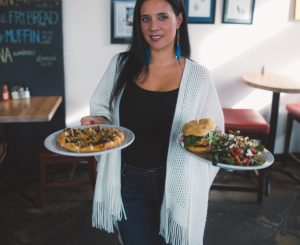
The most popular lunch item is roasted butternut squash bannock crust pizza topped with toasted pine nuts, mozzarella, Bothwell cheddar
and maple chipotle sour cream, with optional bison sausage or pepperoni and vegan and dairy-free alternatives. Desserts include sweetgrass crème brûlée and homemade sweetgrass ice cream.
The menu also features wild rice from northern Manitoba, used in the house salad with Saskatoon vinaigrette, homemade wild rice pasta and rotating specials, such as stuffed wild rice ravioli and bison noodle broth with wild rice ramen.
Guenther grew up in Winnipeg’s North End, surrounded by poverty, family breakdown and addiction. She did not finish high school, attend culinary school or work in a commercial kitchen before opening Feast Café Bistro.

Her interest in food began early when she cooked for younger cousins. At 23, she opened a licensed holistic daycare for inner-city children with complex needs who struggled in larger care settings. After securing funding, she developed a food program.
“Some of the children came from poverty or their mothers didn’t know how to cook or couldn’t afford healthy ingredients,” she says. “It
was amazing to see how food could nurture and change children. I saw their behaviour shift. They had more energy and could learn better.”
At the same time, she reconnected with her First Nations and Métis heritage through food.
“When Canada’s Food Guide for First Nations, Métis and Inuit came out, I saw ingredients I had no idea belonged to my culture or my French background,” she says. “I started incorporating them into my recipes. At that time, there were no cookbooks or accessible histories of traditional food, so I went to communities and asked Elders to share knowledge.
“They gifted me 100-year-old seeds for beans, squash and corn, so I built an Indigenous seed garden,” she says. “I still maintain an Indigenous garden and do a lot of canning.”
Over 10 years, she developed hundreds of recipes while running her daycare and studied global cuisines to expand her culinary approach.
“I would go to Asian shops in Winnipeg and ask owners about ingredients and cooking techniques,” she says. “I learned Thai, Indian, Italian and Greek cooking. I take those influences and create my own dishes.”
When Guenther christened Feast Café Bistro, she intentionally rejected a traditional restaurant structure.
“I wanted to give job opportunities to people in my community,” she says. “We employ people who have faced barriers to employment and provide opportunities to grow and succeed. We support local organizations through job practicums, mentorship work experience programs and business tours.”
She acknowledges the challenges of training staff without prior kitchen experience.
“It takes time and mentorship, but it has been the biggest blessing,” she says. “People who had never cut an onion now make their own soups. They are loyal, kind and reliable. If I can do it, they can too.”
Guenther also hopes to shift industry norms.
“As a woman, a mother and an entrepreneur, I am doing it my way,” she says. “It’s not how kitchens traditionally operate, but it is a respectful, nurturing environment. We are changing the idea that hierarchy is required for success.”
Customers come to Feast Café Bistro for more than food.
“We are creating new, positive food pathways around traditional foods,” she says. “Our story is often rooted in negative narratives, but people leave here understanding who we are as First Nations and Métis peoples.”
She says the restaurant helps reconnect diners with Indigenous food systems and identity.
“I want people to experience the essence of who we are as a people and as a nation through the foods of our terroir.”
Rising food costs remain a challenge, particularly for ingredients such as bison, wild rice and wild berries. Guenther remains committed to
accessibility.
“I need to price my menu so all walks of life can come here,” she says. “I want a young Indigenous woman or man to be able to experience their traditional foods in a restaurant setting. That has been a challenge, along with long hours and sacrifices my family makes, but it is extremely rewarding.”
When she opened the restaurant, Indigenous fine dining was rare in Canada. Today, she sees a growing sector.
“There are now many skilled Indigenous chefs who are classically trained and returning to their roots, using foraged ingredients and sharing
their stories,” she says. “Everyone brings a different story to the table.”
At 49, Guenther has come full circle. Her recipes have appeared on the Food Network and in culinary magazines she once used for educational reading.
“I never thought that would happen as a home cook,” she says.
She now plans to expand into cooking videos and a cookbook.
“I want people to cook these traditional ingredients at home,” she says. “Home is where my heart is.”