


BEHIND the grit and grind of every political campaign is a frenetic logistical operation. Voter lists, volunteer recruitment, fundraising, lawn signs and door-knocking: All of these elements have to come together under intense time pressure and resource constraints.
Between the 137 incorporated municipalities and 38 school districts across the province, hundreds of candidates are discovering the realities of retail politics as part of the lead-up to the 2026 Manitoba municipal general elections being held on Oct. 28.
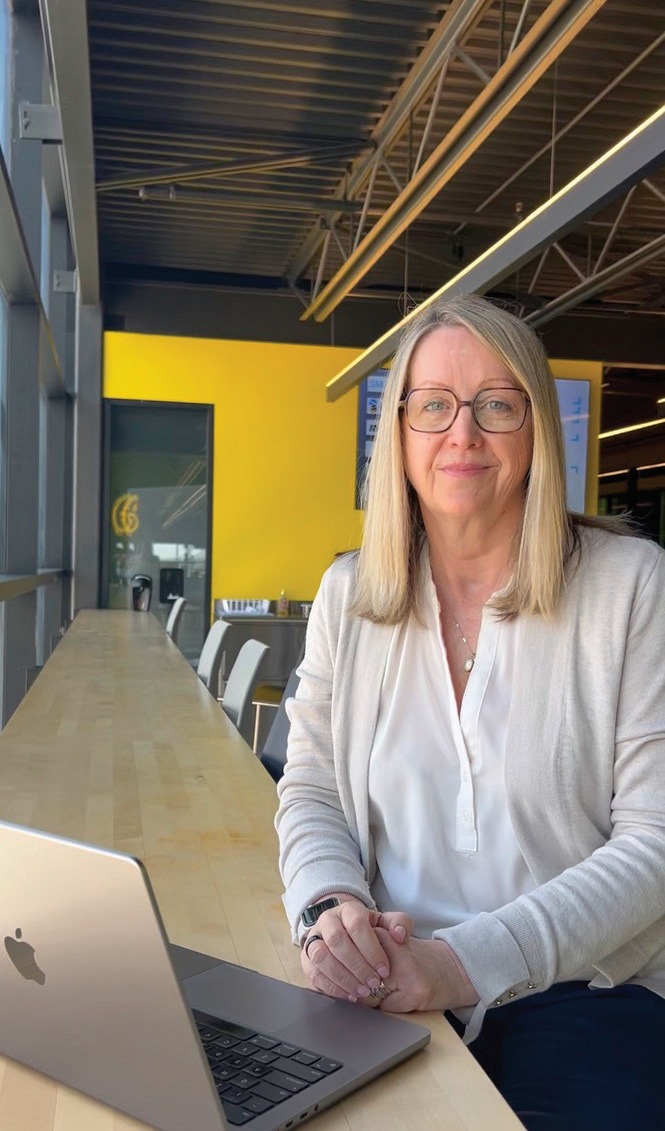
For Winnipeg entrepreneur Nancy Cooke, the steep learning curve involved in running for office is something she’s experienced firsthand as a candidate, and she turned that experience into a software company.
Filling a logistics gap

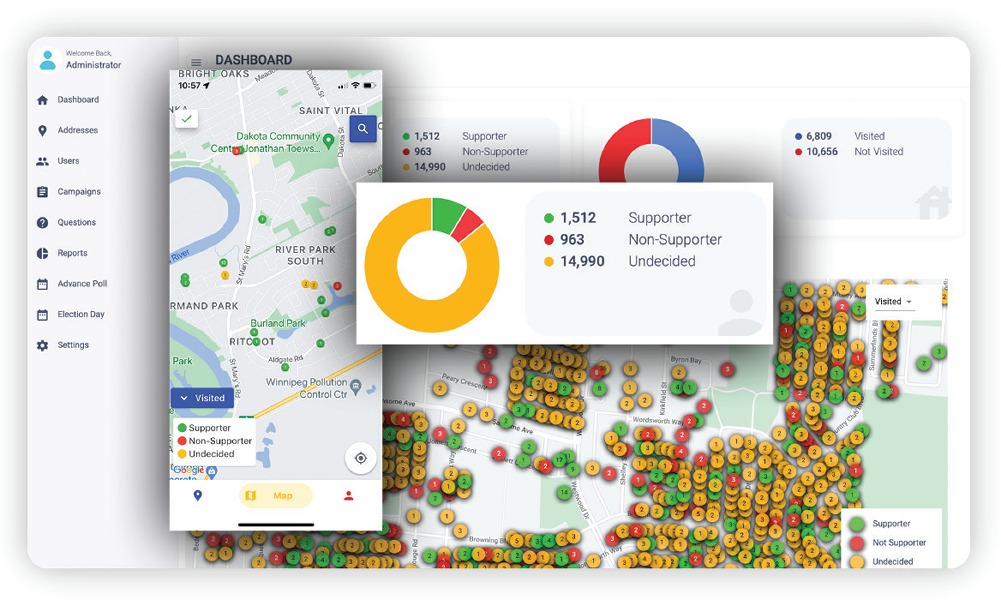
Cooke founded Campaign Compass, an all-in-one digital platform designed to help candidates and campaign teams organize nearly every aspect of an election campaign. She formally launched the company in 2022, but the idea took shape several years earlier, when Cooke was busy running her own campaigns as an aspiring politician. Her political resume includes a 2018 run for Winnipeg city council in the St. Norbert–Seine River ward, where she finished second in a tight race, followed by a second-place finish in the 2019 Manitoba provincial election in the riding of Fort Garry. She also served as director of political operations and interim executive director with the Progressive Conservative Party of Manitoba.
also been juggling her role as managing partner of Elm Park Dental for the last 26 years, where her husband practises dentistry. Cooke says her business background, combined with her campaign experience, made her particularly conscious of the need for better campaign tools.
“Campaigns are hard and you’re often doing things yourself,” she says. “Maybe one or two people helping you and you’re trying to record your progress and understand whether you’re doing what you need to be doing.”
IN 2018, Cooke developed a prototype designed to handle many of the technical aspects of campaigning.
neighbourhoods, households or even voters had been visited, identify supporters and flag key concerns being raised on the doorsteps of citizens.
Unlike candidates running for established political parties with the benefit of an entire political apparatus supporting them, those running for local governments and school districts often have to build their campaign infrastructure and branding from scratch as independents. “I realized that it would be extremely helpful to have tools that will allow you to be able to get up and running and organize and make the best use of your time and your volunteers’ time,” she said.
One platform, real-time data
Initially designed as a canvassing application, Campaign Compass has evolved into a much broader campaign-management platform.
The software combines a voter and contact CRM (or customer relationship management system), mobile canvassing, fundraising and donation tracking, volunteer coordination, lawn-sign management and communications tools. Tiered subscription plans are available to fit different campaign needs, ranging from $150 to $575 per month. There’s no escaping the hard work involved in running a campaign. Candidates still need to hit the pavement and knock on a sea of doors, but the goal is to replace the old-school approach of collecting information on clipboards and spreadsheets with a system that provides better coordination.
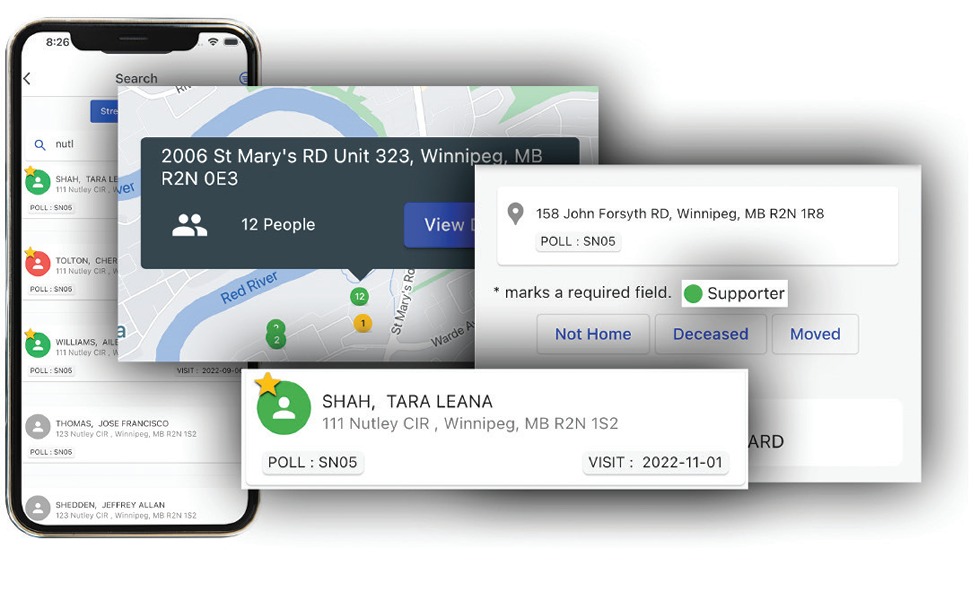


Cooke says although politics is the company’s core market with about 80 per cent of clients running election campaigns, Campaign Compass is also increasingly used by advocacy groups and not-for-profits.
“If there’s a fundraising event that you’re trying to put on, if you’re a not-for-profit and you’re dependent on memberships, we have all of those tools in there as well,” Cooke says.
The common denominator is grassroots engagement.
A made-in-Canada political tech company
One of Cooke’s original motivations was a gap she saw in the Canadian market.
When Campaign Compass launched, she says, most comparable campaign software came from the United States or the United Kingdom. Those platforms weren’t necessarily designed to handle the intricacies of Canadian-style campaign practices or the electoral system itself. That Canadian focus has helped the Winnipeg-based company expand beyond Manitoba. Campaign Compass now has users across Canada, with current municipal campaigns using the platform in British Columbia, Manitoba and Ontario. The company has expanded into six additional provinces and is beginning to explore international markets.
Last April, Cooke won a local product pitch competition organized by North Forge, a local startup incubator, and the U.S. Consulate in Winnipeg. That led to a networking opportunity at the SelectUSA Investment Summit in Washington, D.C.
The platform now has more than 2,000 users, and Cooke estimates that number could reach more than 5,000 in the coming months.
Looking ahead
Campaign Compass is entering a busy phase as general elections are currently underway in two other provinces. Cooke says the company continues to develop its platform by listening to clients and adapting its tools to their needs.
Her motivation to innovate and grow is rooted in her desire to make participation in democracy easier.
“I believe in an open democracy,”
Cooke says. “You should be able to choose to run and participate and engage, and there should be tools available to make that easier for you.”