


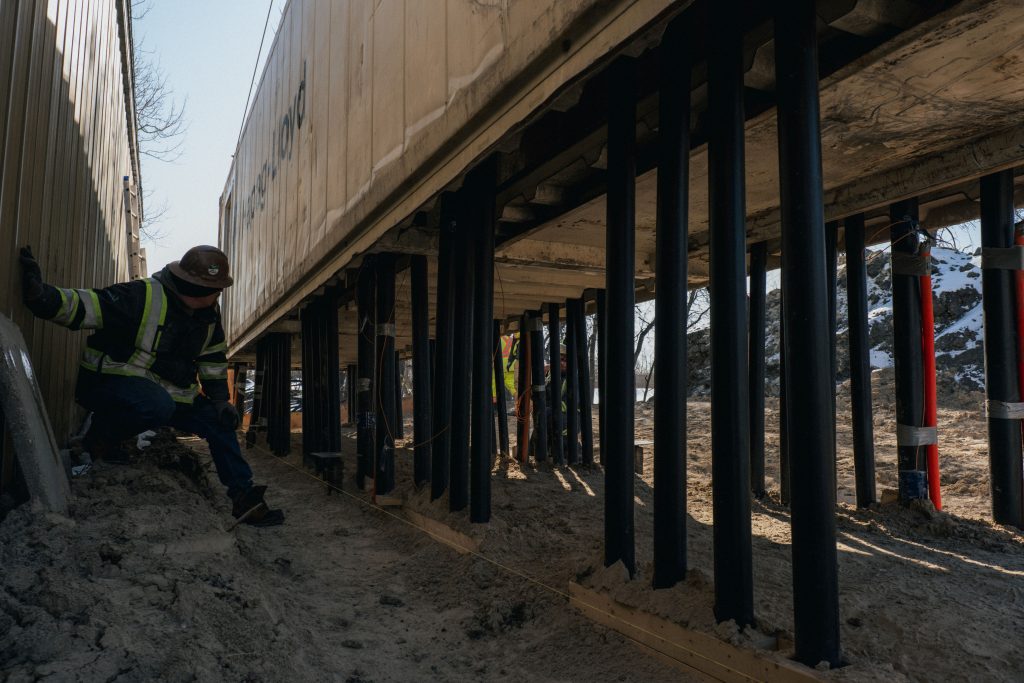
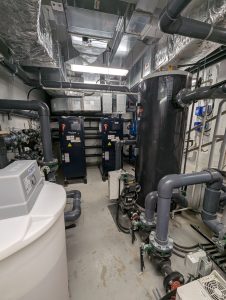
Ed Lohrenz has been involved with geothermal technology since its beginnings in the 1980s, designing environmentally-sustainable heating and cooling systems for sites across Canada and around the world. Having worked on everything from a small-town hockey arena to a 17-storey Manhattan office building in locales ranging from the Siberian tundra to the Australian outback, Lohrenz knows there are no one size-fits-all options with geothermal.
That’s why GEOptimize, the Winnipeg-based geothermal consulting firm Lohrenz founded in 2013, models, designs and optimizes site-specific geothermal systems that take into account geological and climatic conditions—in Manitoba, that means layers of clay and limestone and a punishing 70-degree temperature range—as well as building function and client needs.
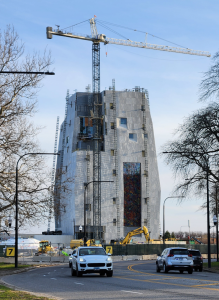
The company’s four-person team recently consulted on the Obama Presidential Center in Chicago, providing geothermal design assistance to the engineering firms working on the multi-structure campus. “Certainly, it’s a high-profile project and it’s always interesting to be involved with those,” Lohrenz says. While it was a huge undertaking, Lohrenz was particularly struck by some of the little details, such as transferring excess heat from buildings to melt snow on sidewalks—an idea that would seem to have cold-weather applications here at home.
When it comes to using geothermal technology in Manitoba, though, the possibilities go way beyond toasty sidewalks. According to Lohrenz, bringing more geothermal options into the province’s energy mix offers important environmental and economic benefits. Manitoba Hydro, the province’s primary provider of power, could be nearing its peak-usage supply limits as early as 2029.
“Reducing that peak kilowatt demand is one of the things that geothermal does that no other technology can do,” Lohrenz says. “Manitoba Hydro has to be able to meet the demand on the coldest day of winter. Not having that energy is not an option.”
Geothermal, which works by tapping into the renewable energy stored beneath the earth’s surface to heat and cool buildings, can help. Because eachkilowatt of electrical energy used to power a ground source heat pump (GSHP) produces an average of three to four kilowatts of heat energy, geothermal can ease the demand on stressed electrical grids.
Delaying the need for new—and hugely expensive—hydroelectric infrastructure means lower capital costs and higher revenues. “That’s why many jurisdictions and electric utilities across the country offer incentives to install geothermal systems,” Lohrenz explains.
Electrical grids are being challenged by several factors in 2026—population growth, climate change and current technological trends. “We’re seeing a lot more electrical demand in the last couple of years because of AI data centres and bitcoin mining and things like that, because they draw a lot of power,” Lohrenz says.
No matter how people feel about them, data centres are coming, Lohrenz believes, but geothermal systems can offset some of their downsides. These megascale AI facilities consume massive amounts of energy—one site proposed for Manitoba would require about one-seventh of the power produced by the Keeyask dam, according to Lohrenz—but they also kick off a lot of heat. In cold climates, geothermal technology can be used effectively to divert that heat to other buildings.
Finland, for example, “is purposely building data centres underground and that heats a portion of downtown Helsinki,” Lohrenz says.
In terms of Manitoba models, there has only been some very preliminary analysis. “If the heat from a 180-megawatt data farm was diverted to a greenhouse, it could heat a half-square-mile of greenhouse, or 320 acres.”
That’s a lot of winter tomatoes.
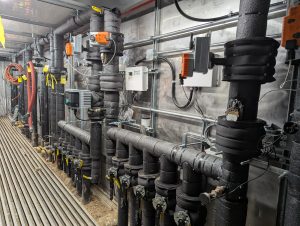
Beyond using geothermal to heat and cool individual buildings, the technology increasingly involves larger multi-structure systems. Lohrenz has been working with Canadian Mennonite University, which is currently planning to join nine of its campus buildings into a geothermal energy network.
“This takes advantage of some of the synergies of different types of buildings,” he explains. For example, you can connect classroom buildings used mostly in the day with residences used more at night, so that heat can shift over as needed.
And while retrofitting existing structures for geothermal options is good, planned thermal energy networks that connect new-build neighbourhoods and commercial districts would be even better. Setting up geothermal from the get-go increases overall energy efficiency and substantially reduces initial installation costs. Start-up capital costs are still borne by individuals, corporations or developers, however,
which is why Climate Action Team Manitoba, a coalition of environmental groups, is advocating for the provincial government to set up a public utility to build and manage large-scale geothermal infrastructure. This issue came up when Lohrenz and his colleagues recently did a feasibility study for the Water Tower District in St. Boniface.
Expanding geothermal power in Manitoba has clear environmental benefits, but it makes economic sense, too, according to Loren Remillard, president and CEO of the Winnipeg Chamber of Commerce.
“When you take a look at trade right now, there’s a heavy push on diversifying our trade markets to better manage risk and insulate ourselves from overreliance on any one market. That same thinking applies to energy,” he says. “We’re seeing the cost of an overreliance on one source of energy play out in the conflict with Iran. It’s imperative for our community, our business community, our country, that we
ensure we develop as many forms of energy and sources of energy as we can, to better insulate our economy from shocks that are happening halfway across the world.”
As Remillard suggests, “Renewable energy is essential for our economy right now but even more so into the future.”